Research Interests
Gopher Tortoises
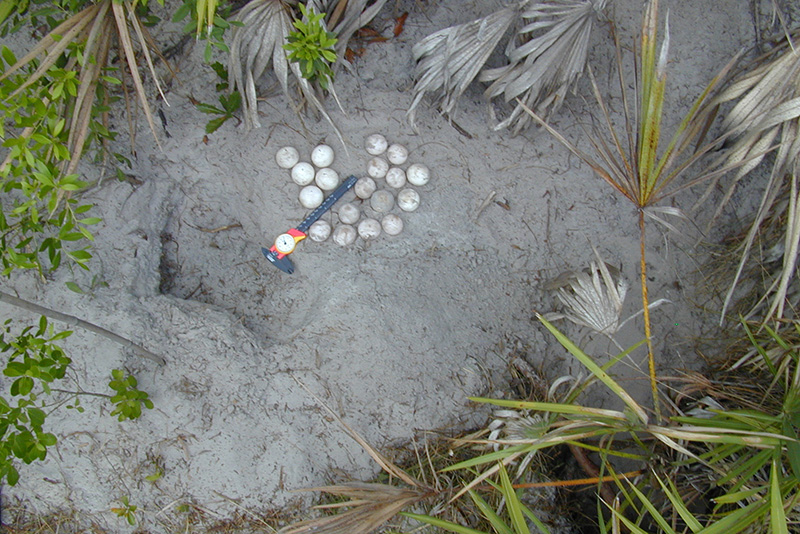
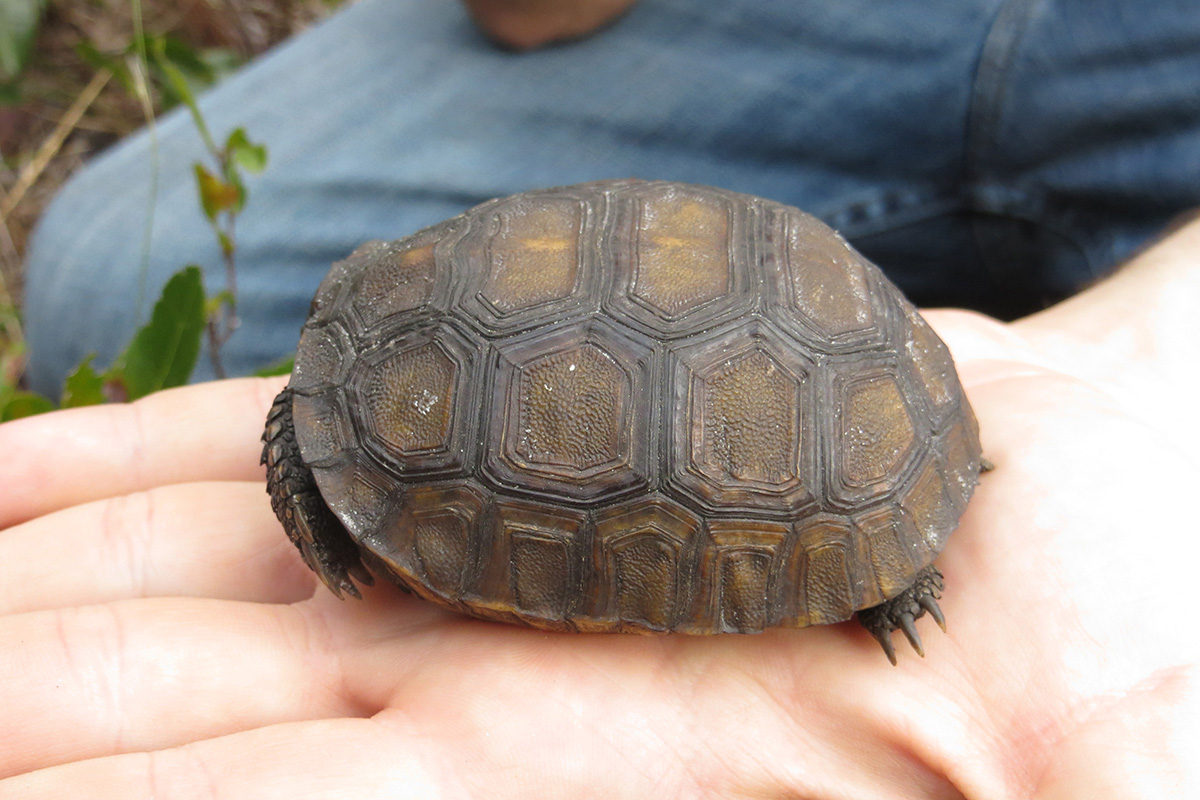
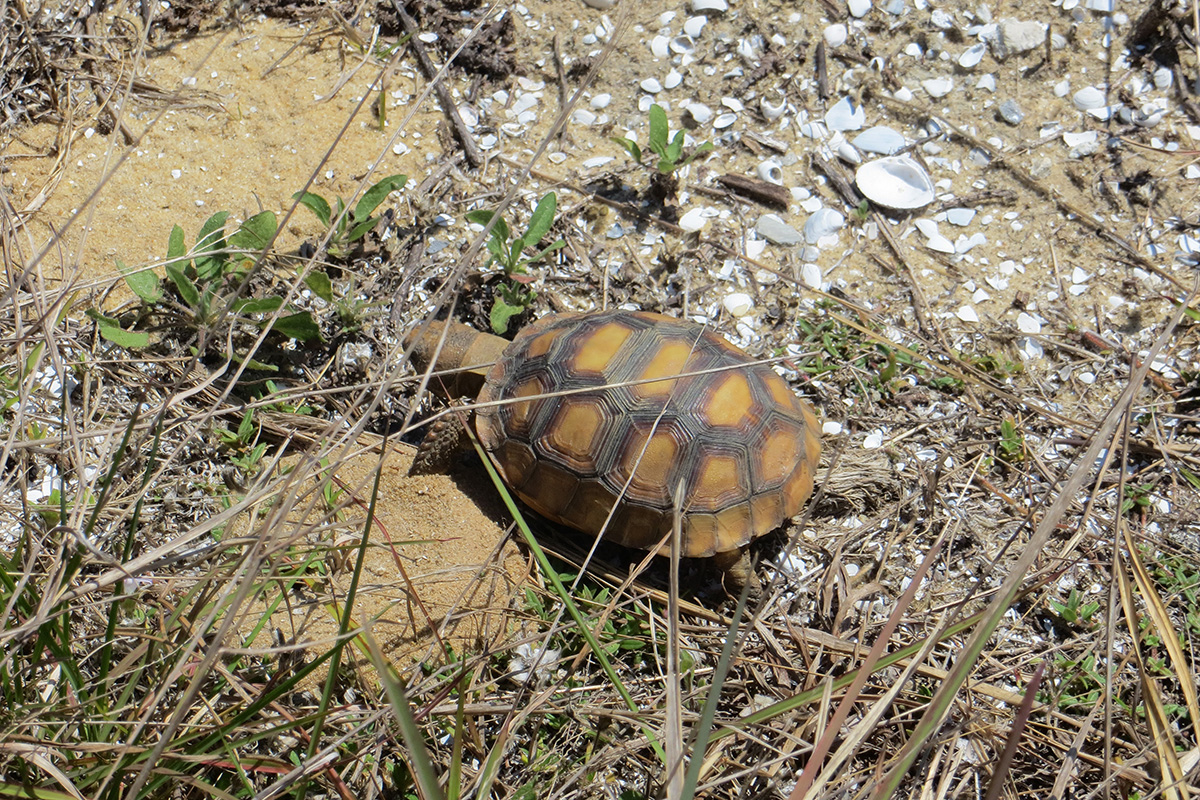
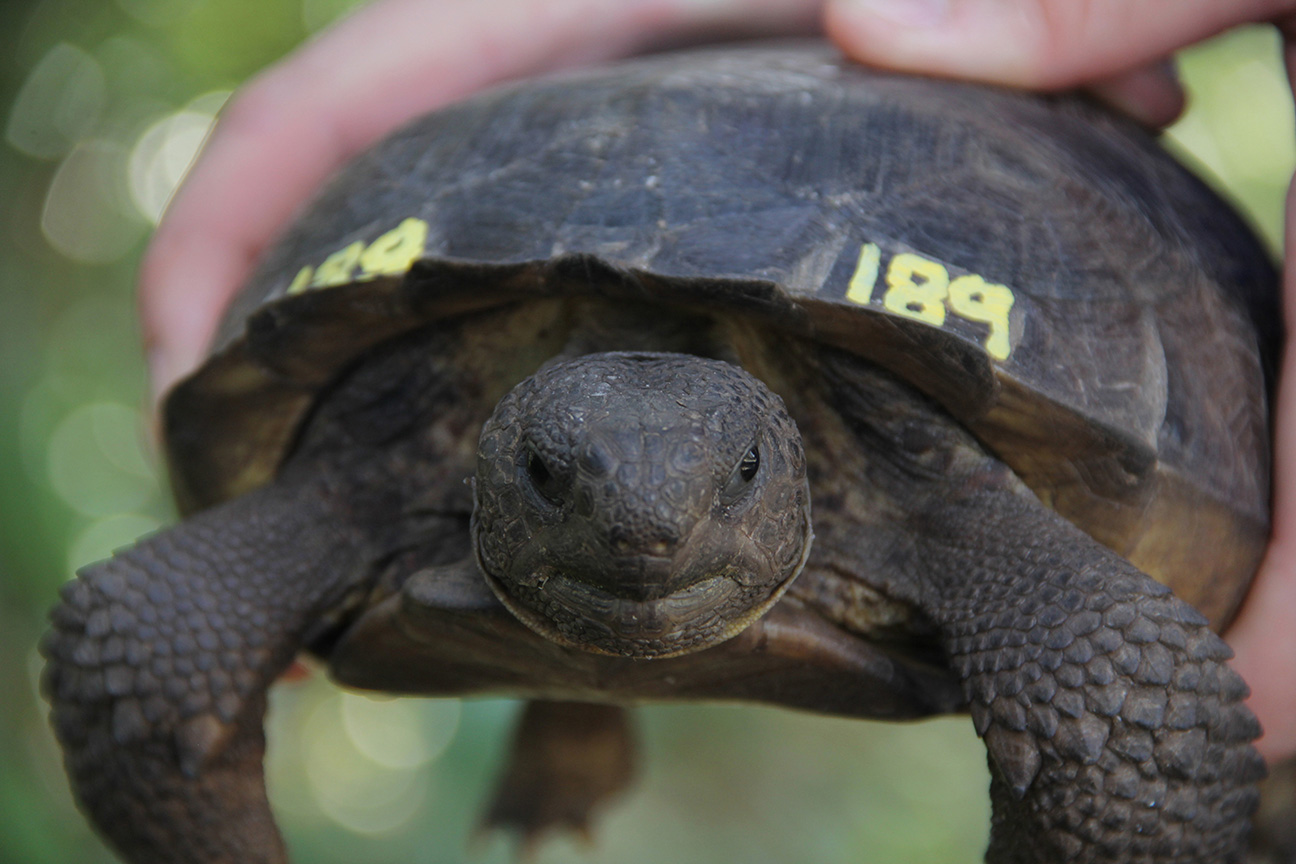
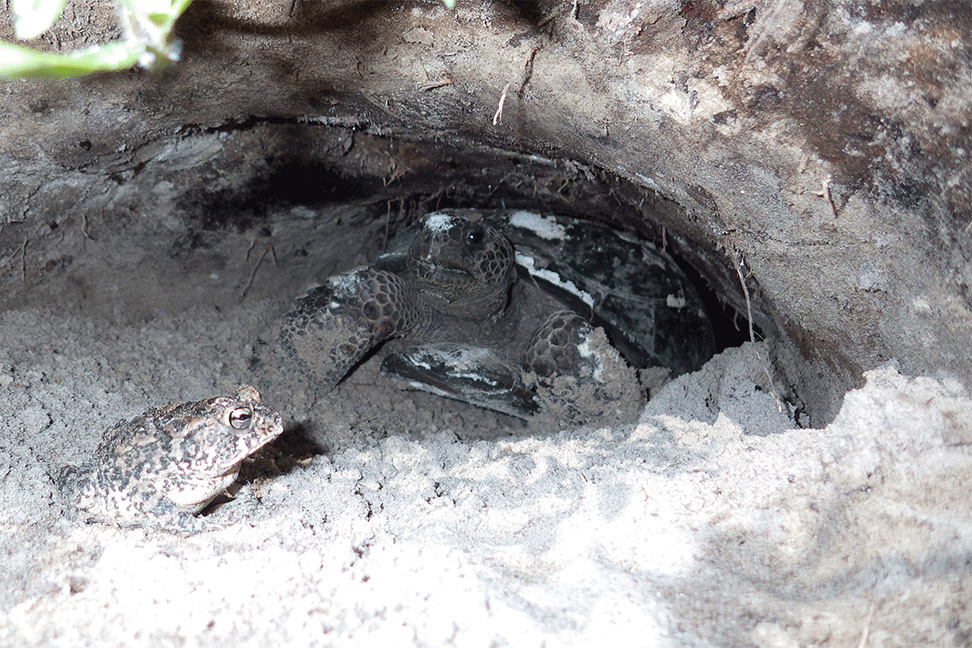
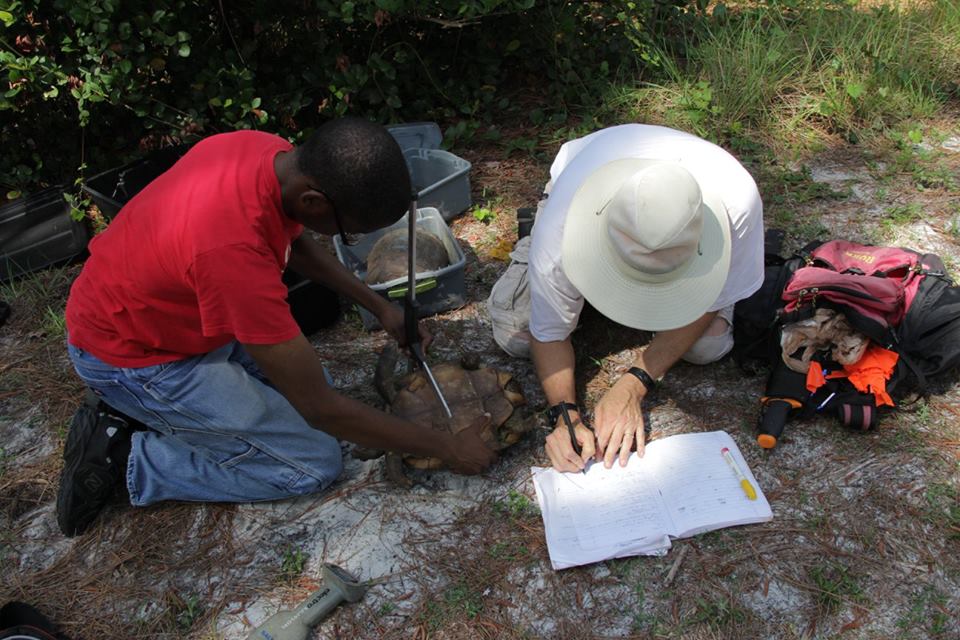
Descriptions for the images above From left to right: Fig. 1. Measuring gopher tortoise eggs. Fig. 2. A one-year old gopher tortoise juvenile. Fig. 3. A two-year old gopher tortoise juvenile. Fig. 4. Gopher tortoise number 189. Fig. 5. A gopher tortoise in its burrow with a southern toad. Fig. 6. David Lucien (left) and Jon Moore (right) measuring gopher tortoises in the Abacoa Greenway.
Overview of Gopher Tortoise Ecology
Gopher tortoises (Gopherus polyphemus) are large land turtles that live in well-drained habitats on the coastal plain of the southeastern United States. Gopher tortoises prefer habitats with sandy soils for digging burrows, sufficient herbaceous plants for food, and open areas for nesting and basking. Gopher tortoise burrows can be extensive and provide shelter for many other animal species. Some animal species are known primarily from gopher tortoise burrows, including the gopher frog (Rana capito) and the Florida mouse (Podomys floridanus). My students and I have found many other species inside burrows that we survey, such as southern toads, southern five-lined skinks, indigo snakes, eastern diamondback rattlesnakes, hispid cotton rats, northern curlytail lizards, and several types of flies, beetles, and spiders.
The Abacoa Greenway Study Site
Gopher tortoise populations are declining throughout most of their range, primarily due to habitat destruction. The tortoises' decline has been particularly great in southeast Florida, where tortoise habitat has been converted to citrus orchards and housing developments. The gopher tortoise is now protected in Florida as a threatened species. Our primary study site is one section of the "greenway system" in the Abacoa development of Jupiter, Florida. In fact, this greenway may actually constitute a linear habitat in that the greenway comes to an end adjacent to other developed neighborhoods without actually connecting to other natural habitats. The particular segment of the greenway that encompasses our study site (Range VIa) is a 9.16 hectare (22.9 acres) range (Wetterer and Moore 2005) and we have been studying the tortoises at this site since January 2001.
A greenway path encircles the entire study site and two linear areas of disturbance cross through the northern and eastern portions of the range one is an old cattle fence with adjacent cleared areas from prior to 1996 and another is a pipeline dug about 1999. The north and west sides of the range are bounded by a chain-link fence, sidewalk and road. The south and east sides are bounded by a sunken dry detention area and channels for directing and holding rainwater runoff from storms (and the spring training facilities of the St. Louis Cardinals just beyond that).
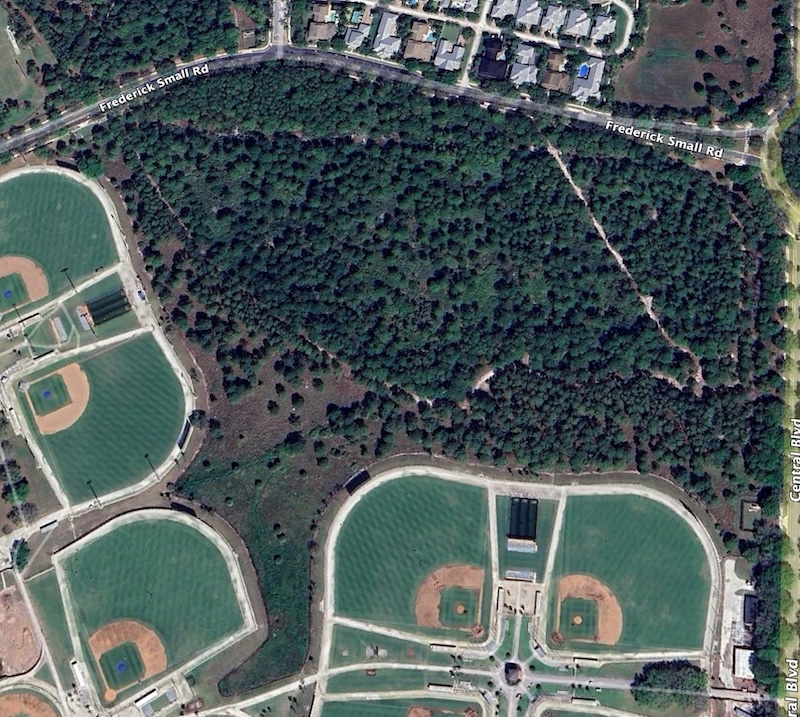
The greenway path is primarily characterized by bahia grass (Paspalum notatum) and this path is routinely mowed. The pipeline is largely open sand with low grasses and herbs growing in patches. The old fenceline is dominated by bunches of wiregrass (Aristida beyrichiana) and chalky bluestem (Andropogon virginicus var. glaucus) with small stands of young slash pine (Pinus elliottii) saplings and gallberry (Ilex glabra). The undisturbed portions of the range consist of typical flatwood scrub, with a sparse canopy of mature slash pines, an understory of saw palmetto (Serenoa repens) thickets and scrubby oaks (Quercus spp.), and open spaces dominated by wiregrass, with lesser amounts of runner oak (Quercus minima) and deer moss lichens (Cladina spp. and Cladonia spp.).
Field Protocols
My students and I have studied the burrow use and movements of tortoises, the demography of upper respiratory tract disease (URTD), the reproductive period and other aspects of tortoise biology and behavior at Abacoa and at Savannas Preserve State Park in Florida (Moore and Fitchett 2004). We have marked over 150 individual tortoises in Abacoa and another 150 at other sites in southeastern Florida. We have been using acrylic paint pens to write numbers on the carapace over each leg. This allows us to determine which tortoise is inside a burrow, no matter how they are oriented, by shining a light down the burrow. To more permanently mark the tortoise, we inject a microchip under the carapace. This method has worked well and we have been following chipped tortoises for over four years now. Watch Nasir Khan's video on Researching Greenway Habitats to watch Dr. Moore and his students as they study gopher tortoises in the Abacoa Greenway preserve.
Researching Greenway Habitats. Video by AKNMultimedia
Watch a 12-minute video by Nasir Khan as he follows Dr. Moore around the Abacoa Greenway as he conducts field studies on gopher tortoises.
Studies on Gopher Tortoise Reproduction in South Florida
The tortoises in South Florida are facing much different climatic conditions compared to those in North Florida and outside of Florida. My students and I have found that mating and reproduction goes on almost all year long at our study site (Moore et al. 2009). We have been monitoring female tortoises over the past few years using a portable field ultrasound machine to document the period of time over in which follicles develop into eggs. When the eggshell shows enough reflectivity in the ultrasound, the females are transported to an animal hospital to be x-rayed. When the eggs are calcified enough, we can count and measure the size of the eggs. This gives us information of the clutch sizes of female gopher tortoises in southeast Florida.
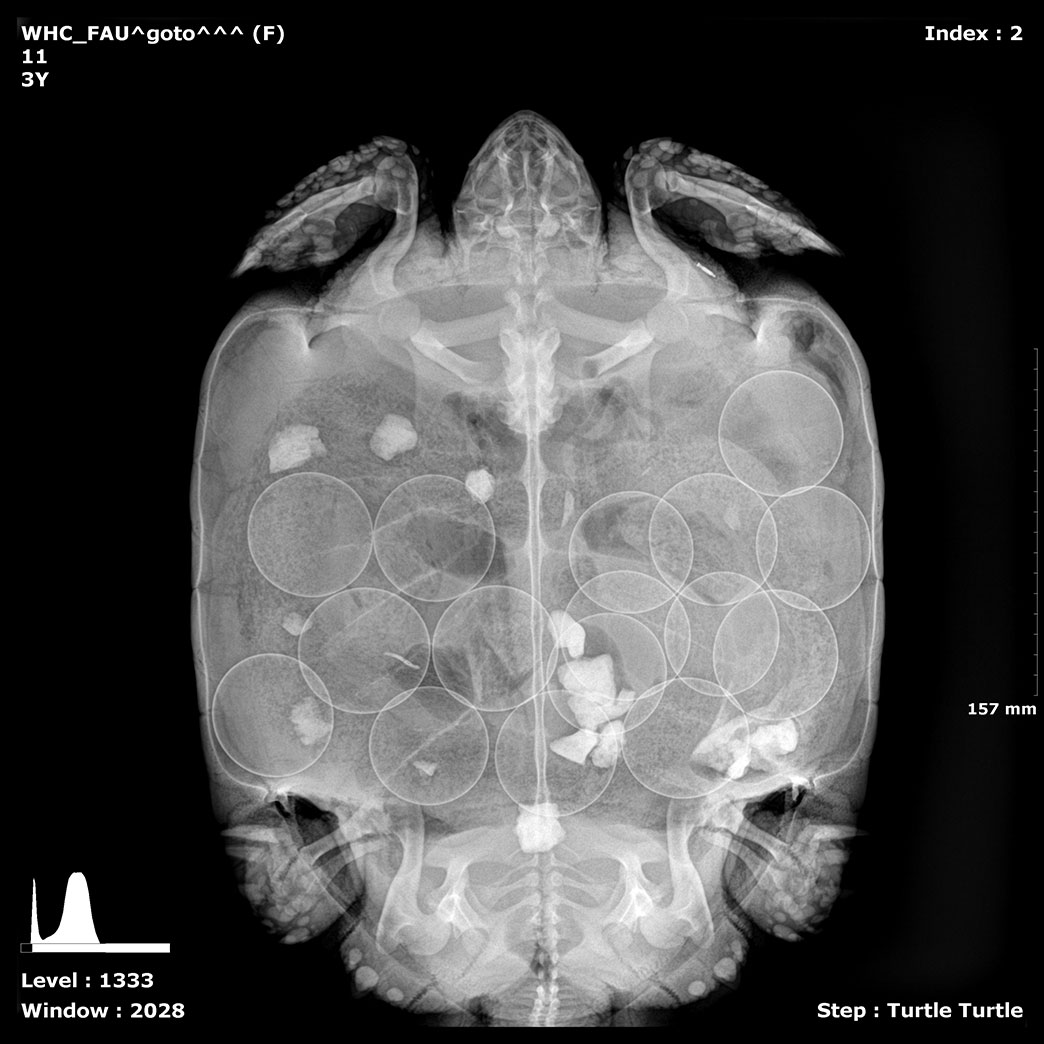
Preliminary results have shown that females in southeast Florida produce almost twice as many eggs compared to females in populations to the north.
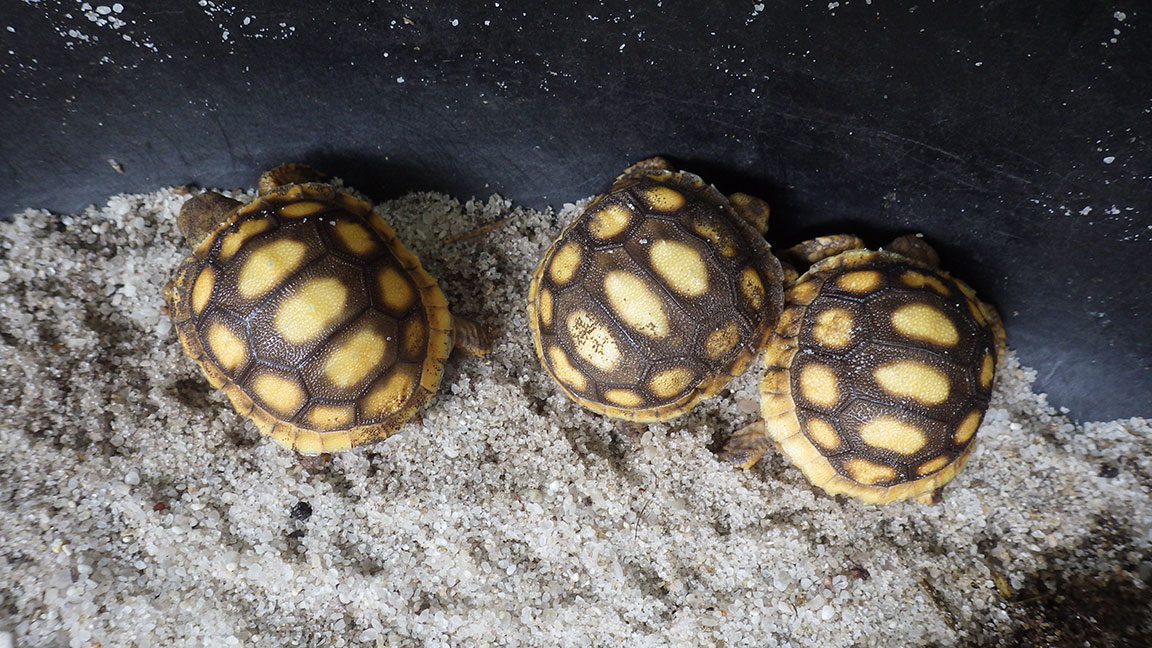
Baby Gopher Tortoises
Q: What is a group of tortoises called?
A: A group of tortoises is called a creep.
Interactions With Invasive Species
An edge effect refers to impacts at the edge of a habitat that don't occur in the deeper interior of that habitat. Dr. Jim Wetterer and I have studied the association of fire ants with those burrows close to the edges of the greenway (Wetterer and Moore 2005). We found a strong occurrence of fire ant colonies in the disturbed areas, including the tortoise burrow aprons, around the periphery of our site.
Pine flatwoods and scrub habitats also require periodic fires to burn back the faster growing plants, such as saw palmetto, and free up space for low growing grasses and herbs, which are food for gopher tortoises. With the increasing urbanization of South Florida, the occurrence of fire is either controlled or outright suppressed. Controlled burns are a management tool used to restore the habitats, however, there is public resistance to having fires in the neighborhood of housing developments (Marti et al. 2005). An alternative method is reduction mowing, where large machines are used to cut back the overgrown saw palmetto and other plants. My students and I are currently studying the success of this method for tortoises and the impacts on plants and animals in the habitat.
References Cited
Moore, J. A. and A. Dornburg. 2014. Ingestion of fossil seashells, stones, and small mammal bones by gravid gopher tortoises (Gopherus polyphemus) in South Florida. Bull. Peabody Museum of Natural History. 55(1):55-63.
Moore, J. A., M. Strattan, and V. Szabo. 2009. Evidence for year-round reproduction in a population of the gopher tortoise from southern Florida. Bull. Peabody Museum Natural History (Yale University). 50(2):387-392.
Moore, J. A., R. M. Engeman, H. T. Smith, and J. Woolard. 2006. Gopherus polyphemus (Gopher tortoise). Coyote predation. Herpetological Review. 37(1):78.
Wetterer, J. K. and J. A. Moore. 2005. Fire ants on gopher tortoise burrows in southern Florida. Florida Entomologist. 88(4):349-354.
Marti, D, W. O’Brien, H. Smith, J. Moore, and S. Fitchett. 2005. Endangered species, prescribed fires, and public resistance in a Florida scrub community. Endangered Species Update. 22(1):18-28.
Moore, J. and S. Fitchett. 2004. Connecting science to the community at Florida Atlantic University. Pp. 187-192, in: S. Cunningham and Y. S. George (eds.) Invention and Impact: Building Excellence in Undergraduate Science, Technology, Engineering and Mathematics (STEM) Education. AAAS Publication Services, Washington, DC.